---
title: Get Your Green Tag With Minitab
description: Learn what a green tag means in manufacturing and how data-driven visibility, statistical analysis, and real-time monitoring help teams consistently meet quality and performance standards.
image: https://blog.minitab.com/hubfs/manufacturing1.png
---
English
- [English](https://blog.minitab.com/en/?hsLang=en)
- [Français](https://blog.minitab.com/fr/?hsLang=en)
- [Deutsch](https://blog.minitab.com/de/?hsLang=en)
- [Português](https://blog.minitab.com/pt/?hsLang=en)
- [Español](https://blog.minitab.com/es/?hsLang=en)
- [日本語](https://blog.minitab.com/ja/?hsLang=en)
- [한국어](https://blog.minitab.com/ko/?hsLang=en)
- [中文(简体)](https://blog.minitab.com/zh/?hsLang=en)
- [ Partners](https://www.minitab.com/en-us/company/partners/)
- [ Contact](https://www.minitab.com/en-us/company/contact-us/)
- [ Talk to Minitab](https://www.minitab.com/en-us/talk-to-minitab/)
- [ My Account](https://licensing.minitab.com/account/manage)
[](https://www.minitab.com/en-us/)
- Products
Back
[Products](https://www.minitab.com/en-us/products/)
[All Products](https://www.minitab.com/en-us/products/)
- [Minitab Solution Center](https://www.minitab.com/en-us/products/minitab-solution-center/)
- [Minitab Statistical Software](https://www.minitab.com/en-us/products/minitab/)
- [Minitab Connect](https://www.minitab.com/en-us/products/connect/)
- [Minitab Model Ops](https://www.minitab.com/en-us/products/model-ops/)
- [Minitab Education Hub](https://www.minitab.com/en-us/products/education-hub/)
- [Minitab Engage](https://www.minitab.com/en-us/products/engage/)
- [Minitab Workspace](https://www.minitab.com/en-us/products/workspace/)
- [Real-Time SPC](https://www.minitab.com/en-us/products/real-time-spc/)
- [Prolink Data Collection & SPC](https://www.minitab.com/en-us/products/prolink)
- [Simul8 Discrete Event Simulation](https://info.minitab.com/en/new-to-simul8?hsLang=en)
- [SPM](https://www.minitab.com/en-us/products/spm/)
- Solutions
Back
[Solutions](https://www.minitab.com/en-us/solutions/)
[All Solutions](https://www.minitab.com/en-us/solutions/)
- [Analytics](https://www.minitab.com/en-us/solutions/analytics/)
- [Statistics & Predictive Analytics](https://www.minitab.com/en-us/solutions/analytics/statistical-analysis-predictive-analytics/)
- [Data Science & Machine Learning](https://www.minitab.com/en-us/solutions/analytics/data-science-machine-learning/)
- [Business Analytics & Intelligence](https://www.minitab.com/en-us/solutions/analytics/business-analytics-intelligence/)
- [Statistical Process Control](https://www.minitab.com/en-us/solutions/analytics/statistical-process-control/)
- [Quality Analytics](https://www.minitab.com/en-us/solutions/analytics/quality-analytics/)
- [Live Analytics](https://www.minitab.com/en-us/solutions/analytics/live-analytics/)
- [Reliability & Life Data Analysis](https://www.minitab.com/en-us/solutions/analytics/reliability/)
- [Discrete Event Simulation](https://info.minitab.com/en/new-to-simul8?hsLang=en)
- [Process Mining](https://info.minitab.com/en/new-to-simul8?hsLang=en)
- [Key Capabilities](https://www.minitab.com/en-us/solutions/key-capabilities/)
- [Continuous Improvement](https://www.minitab.com/en-us/solutions/key-capabilities/continuous-improvement/)
- [Data Integration & Data Prep](https://www.minitab.com/en-us/solutions/key-capabilities/data-integration-data-prep/)
- [Diagramming & Mind Mapping](https://www.minitab.com/en-us/solutions/key-capabilities/diagramming-mind-mapping/)
- [Digital Twins](https://info.minitab.com/en/new-to-simul8?hsLang=en)
- [Model Deployment & ML Ops](https://www.minitab.com/en-us/solutions/key-capabilities/model-deployment-ml-ops/)
- [Innovation & Project Management](https://www.minitab.com/en-us/solutions/key-capabilities/innovation-project-management/)
- [Process Excellence: Detect, Correct & Prevent](https://www.minitab.com/en-us/solutions/key-capabilities/process-excellence/)
- [Featured Industries](https://www.minitab.com/en-us/solutions/industry/)
- [Academic](https://www.minitab.com/en-us/solutions/industry/academic/)
- [Energy & Natural Resources](https://www.minitab.com/en-us/solutions/industry/energy-resources/)
- [Government & Public Sector](https://www.minitab.com/en-us/solutions/industry/government/)
- [Healthcare](https://www.minitab.com/en-us/solutions/industry/healthcare/)
- [Insurance](https://www.minitab.com/en-us/solutions/industry/insurance/)
- [Manufacturing & Industrial](https://www.minitab.com/en-us/solutions/industry/manufacturing-industrial/)
- [Services](https://www.minitab.com/en-us/solutions/industry/service-industries/)
- [Software & Technology](https://www.minitab.com/en-us/solutions/industry/software-technology/)
- [Construction](https://www.minitab.com/en-us/solutions/industry/construction/)
- [Featured Roles](https://www.minitab.com/en-us/solutions/role/)
- [Engineering](https://www.minitab.com/en-us/solutions/role/engineering/)
- [Business Analysis](https://www.minitab.com/en-us/solutions/role/business-analysts/)
- [Information Technology](https://www.minitab.com/en-us/solutions/role/information-technology/)
- [Supply Chain](https://www.minitab.com/en-us/solutions/role/supply-chain/)
- [Customer Service & Contact Center](https://www.minitab.com/en-us/solutions/role/customer-service-contact-center/)
- [Human Resources](https://www.minitab.com/en-us/solutions/role/human-resources/)
- [Marketing](https://www.minitab.com/en-us/solutions/role/marketing/)
- [Research and Development](https://www.minitab.com/en-us/solutions/role/research-and-development/)
- Resources & Services
Back
[Resources & Services](https://www.minitab.com/en-us/resources-services/)
[All Resources & Services](https://www.minitab.com/en-us/resources-services/)
- [Resources](https://www.minitab.com/en-us/resources-services/resources/)
- [Case Studies](https://www.minitab.com/en-us/resources-services/resources/case-studies/)
- [eBooks & White Papers](https://www.minitab.com/en-us/resources-services/resources/ebooks-and-white-papers/)
- [Blog](https://blog.minitab.com/blog/?hsLang=en)
- [Data Sets](https://www.minitab.com/en-us/resources-services/resources/data-set/)
- [Webinars & Events](https://www.minitab.com/en-us/resources-services/resources/events/)
- [Education Hub](https://www.minitab.com/en-us/resources-services/resources/education-hub/)
- [Services](https://www.minitab.com/en-us/resources-services/services/)
- [Training](https://www.minitab.com/en-us/resources-services/services/training/)
- [Deployment](https://www.minitab.com/en-us/resources-services/services/deployment/)
- [Consulting](https://www.minitab.com/en-us/resources-services/services/statistical-consulting/)
- [Self-Paced Learning](https://www.minitab.com/en-us/resources-services/services/self-paced-learning/)
- [Continuing Education](https://www.minitab.com/en-us/resources-services/services/continuing-education/)
- Support
Back
[Support](https://www.minitab.com/en-us/support/)
[Technical Support](https://www.minitab.com/en-us/support/)
- [Subscriptions & Activation](https://www.minitab.com/en-us/support/subscriptions-and-activation/)
- [Minitab Quick Start](https://www.minitab.com/en-us/support/quick-start/)
- [Training](https://www.minitab.com/en-us/resources-services/services/training/)
- [Installation Support](https://www.minitab.com/en-us/support/installation/)
- [Support Videos](https://www.minitab.com/en-us/support/videos/)
- [Support Documentation](https://www.minitab.com/en-us/support/documents/)
- [Software Updates](https://www.minitab.com/en-us/support/software-updates/)
- [Product Downloads](https://www.minitab.com/en-us/support/downloads/)
- [Support Policy](https://www.minitab.com/en-us/support/policy/)
- Company
Back
[Company](https://www.minitab.com/en-us/company/)
[Company](https://www.minitab.com/en-us/company/)
- [About Us](https://www.minitab.com/en-us/company/our-company/)
- [Leadership Team](https://www.minitab.com/en-us/company/leadership-team/)
- [Partners](https://www.minitab.com/en-us/company/partners/)
- [Careers](https://www.minitab.com/en-us/company/careers/)
- [Contact](https://www.minitab.com/en-us/company/contact-us/)
- [News](https://www.minitab.com/en-us/company/press-releases/)
[Try/Buy](https://www.minitab.com/en-us/try-buy/)
- [Statistics](https://blog.minitab.com/en/blog/tag/statistics)
- [Data Analysis](https://blog.minitab.com/en/blog/tag/data-analysis)
-
- [Quality Improvement](https://blog.minitab.com/en/blog/tag/quality-improvement)
- [Subscribe](https://info.minitab.com/blog/subscribe?hsLang=en)

## Notice
You are now leaving minitab.com.
Click Continue to proceed to:
Continue
Go Back
# Get Your Green Tag With Minitab
[Joshua Zable](https://blog.minitab.com/en/blog/author/joshua-zable) | 4/21/2026
Topics: [Manufacturing](https://blog.minitab.com/en/blog/tag/manufacturing), [Operations](https://blog.minitab.com/en/blog/tag/operations), [Quality](https://blog.minitab.com/en/blog/tag/quality)
- [Share](https://www.linkedin.com/shareArticle?mini=true&url=https://blog.minitab.com/en/blog/get-your-green-tag-with-minitab)
- [Share](https://www.facebook.com/sharer.php?u=https://blog.minitab.com/en/blog/get-your-green-tag-with-minitab)
I’m no machinist. I don’t even play one on TV. But as Minitab has spent more time in the manufacturing world, I’ve been learning right alongside our customers. Recently, I learned about the very important “green tag” on the shop floor.
I also learned that earning your first green tag is a moment worth celebrating. While I may never get one myself, I can share what it takes to earn them and, more importantly, keep them coming.
## What Is a Green Tag in Manufacturing?
A green tag is a visual signal that a product or process is passing inspection or meeting defined specifications. The idea is simple. Consistently earning that green tag across shifts, lines, and plants is where things get difficult.
It requires visibility into what is happening, an understanding of why it is happening, and control over what happens next.
It is also important to clarify that a green tag is not a formal standard. It is a shop floor signal that can represent several things depending on context:
- Quality approval where the product meets specifications
- Process validation where the process is completed correctly within limits
- Process stability where variation is predictable and under control
- Performance achievement where targets like OEE, yield, or scrap are met
- Equipment readiness where machines are running reliably
## Why Do Reactive Plants Struggle to Maintain Green Tags?
Preparation drives consistency. Plants that rely on manual tracking or operator judgment often struggle because issues are identified too late. By the time problems surface, they have already impacted quality or performance.
Automated data collection changes that dynamic. Solutions like [Scytec DataXchange](https://www.minitab.com/en-us/products/scytec-data-collection-and-oee/) provide real-time visibility into uptime, cycle times, and OEE so teams can see exactly what is happening on the floor as it happens.
In the quality lab, [Prolink](https://www.minitab.com/en-us/products/prolink/) helps teams track whether specifications are being met while also surfacing trends. That visibility allows teams to address issues earlier, before they result in failed inspections or lost green tags.
This shift from reactive to proactive is where consistent performance begins. Data becomes the foundation for faster, more confident decisions.
## No Green Tag? How Do You Find the Root Cause?
Once you have visibility, the next challenge is understanding variability. Many teams can see that something is off, but they cannot clearly explain why.
This is where statistical analysis becomes critical. With [Minitab Solution Center](https://www.minitab.com/en-us/products/minitab-solution-center/), teams can analyze process data to uncover root causes and separate signal from noise. Instead of guessing, they can pinpoint the factors driving defects or variation.
If a change is needed, simulation tools like [Simul8](https://info.minitab.com/en/new-to-simul8?hsLang=en) allow teams to test scenarios before making adjustments on the floor. That reduces risk and helps ensure that improvements deliver the expected impact.
After improvements are implemented, maintaining control is just as important. Solutions like [Real-Time SPC](https://www.minitab.com/en-us/products/real-time-spc/) help monitor processes continuously so teams can catch drift early and sustain gains over time.
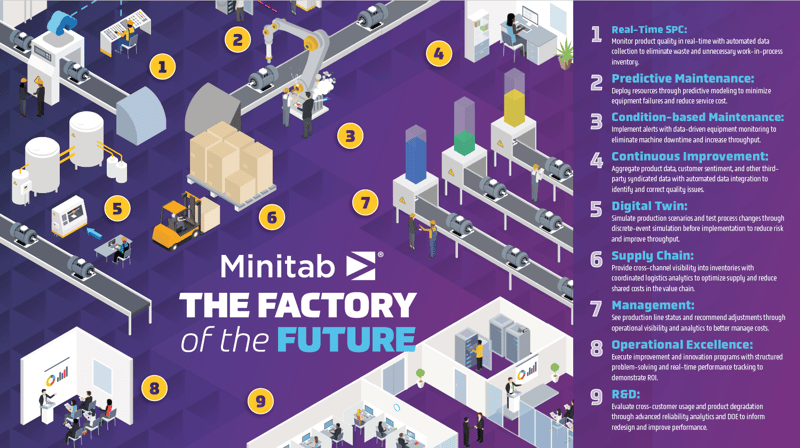
### What does a green tag-ready factory actually look like? Download our infographic to find out.
[](https://blog.minitab.com/hubfs/image-png-Mar-30-2026-02-56-26-4986-PM.png?hsLang=en)
[](https://blog.minitab.com/hs/cta/wi/redirect?encryptedPayload=AVxigLIz1uHNqtpyzb6q%2FheES21MBfENNriGTcvqiN4yW4rQO8xn6FYhbBr5n4V5d%2BXKt59Q0m2KisSx%2BZJw5Rzbq0UE65iXSJfvHhjQv%2BVqc8DZJWXarshSQ%2BAqPfyUCG62%2Bc8zuSXnqPOwgM9RvOpelr1DUFIaK8JbO6wGagKnYWydnBxrWUQWw3%2FEMSA4nMw2zC%2Fr4iSg3cnwQyPG%2B2yYYzKCLjZ%2F9zxF%2Fk616avNKMhk&webInteractiveContentId=211471934894&portalId=3447555&hsLang=en)
## How Do You Consistently Earn Green Tags?
Green tags are earned through disciplined, data-driven processes. The goal is not to assign green tags. The goal is to build processes that achieve them consistently.
That requires connecting data across systems, turning that data into insight, and using those insights to guide decisions in real time. With the right combination of visibility and analytics, teams move from reacting to problems to preventing them.
Minitab supports that journey at every stage, whether an organization is just starting with data collection or advancing toward predictive analytics and continuous improvement at scale.
When data is clear and actionable, teams can improve faster, reduce variability, and deliver consistent quality. That is what keeps green tags moving.
### Start building process that consistently deliver quality today. [](https://blog.minitab.com/hs/cta/wi/redirect?encryptedPayload=AVxigLIxkuQPyWUIcyDQjSqBGXEUn0u4xJgctzWVLeDw7nUILD226gUDLJNryW%2Bi0sysyFs%2BM2hgoZ7%2BQzTBMkPW5lnwDV06lOXF3u7pkzXyMwvUT7F9aTAmjzYncMSRsNYSudn9AQVGNDf3LeYScAE%2FK%2FRxT4AoA17JALZjiwVl%2F7RvinINMkEV1WFdHtZf0Ya9A%2BA%3D&webInteractiveContentId=211476324880&portalId=3447555&hsLang=en)
## You Might Also Like
[How OEE Helps Manufacturers Increase Capacity Without Buying New Equipment](https://blog.minitab.com/en/blog/how-oee-helps-manufacturers-increase-capacity-without-buying-new-equipment?hsLang=en)
[Oee](https://blog.minitab.com/en/blog/tag/oee) | 5 Minute Read
[The Most Valuable Thing That OEE Doesn't Measure](https://blog.minitab.com/en/blog/oee-and-spc-for-maufacturing?hsLang=en)
[Manufacturing](https://blog.minitab.com/en/blog/tag/manufacturing) | 3 Minute Read
[The Hidden Driver of Manufacturing Profitability | Cost of Quality](https://blog.minitab.com/en/blog/cost-of-quality-manufacturing-profitability?hsLang=en)
[Quality](https://blog.minitab.com/en/blog/tag/quality) | 3 Minute Read
---
- [Careers](https://www.minitab.com/en-us/company/careers/)
- [Trust Center](https://www.minitab.com/en-us/trust-center/)
- [Suppliers](https://www.minitab.com/en-us/suppliers/)
- [Site Map](https://www.minitab.com/en-us/site-map/)
- [](https://www.linkedin.com/company/minitab/)
- [](https://www.facebook.com/Minitab/)
- [](https://www.youtube.com/user/MinitabInc)
- [](https://www.instagram.com/minitab/)
---
© 2025 Minitab, LLC. All Rights Reserved.
- [Terms of Use](https://www.minitab.com/en-us/legal/terms-of-use/)
- [Privacy Policy](https://www.minitab.com/en-us/legal/privacy-policy/)
- [Legal](https://www.minitab.com/en-us/legal/)
- Cookies Settings