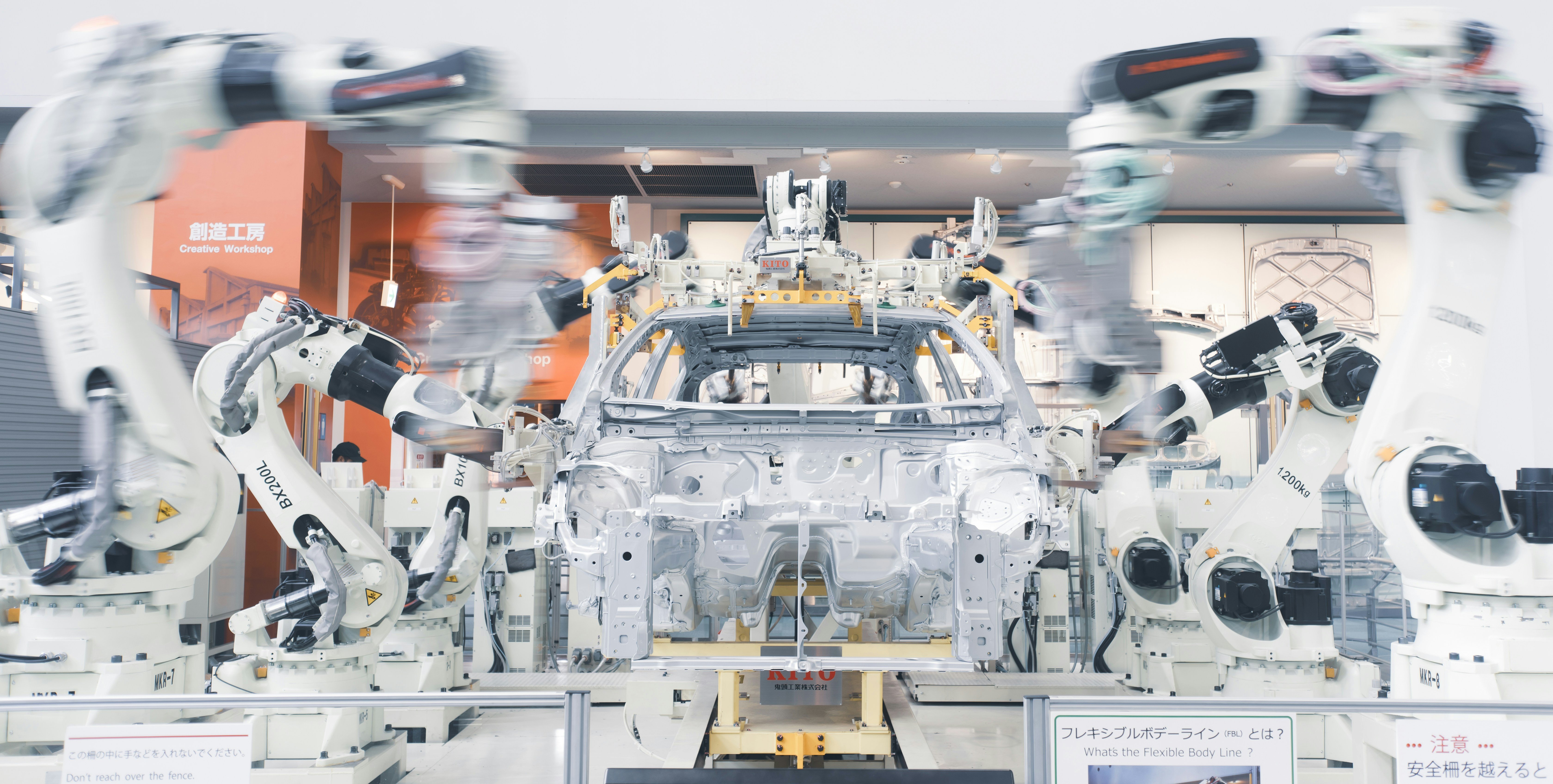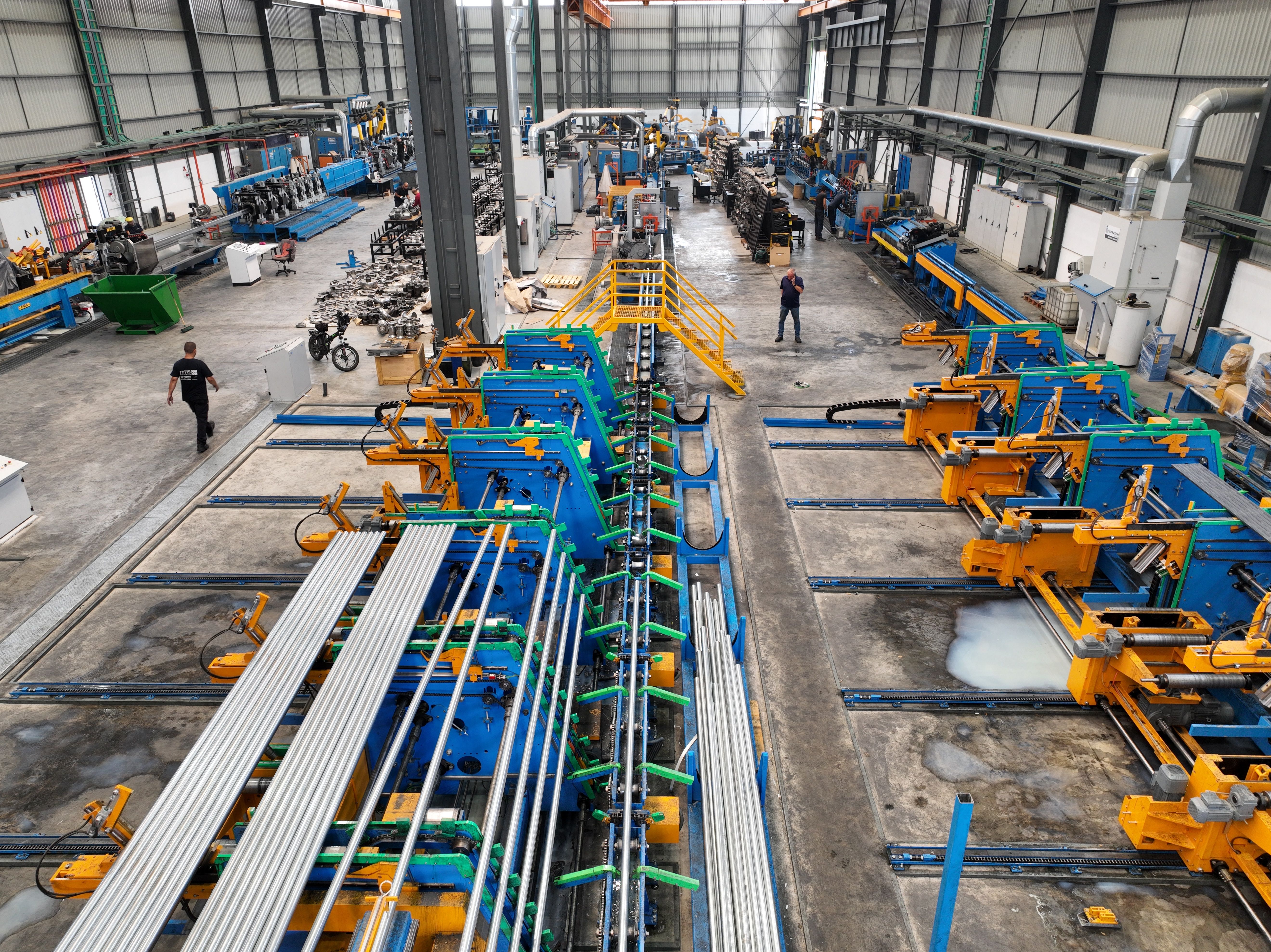
Rising demand doesn't always mean manufacturers need more equipment. Production lines often have untapped capacity hidden in downtime, process variation, inefficient scheduling, and bottlenecks that can emerge from machining through assembly and inspection. Before investing in another machine, adding a shift, or expanding inspection, manufacturers need to understand what's limiting output and where improvements can increase throughput.
By combining production data, statistical analysis, and simulation, manufacturers can identify and test ways to increase throughput. Minitab helps teams turn operational data into actionable insights so they can get more from existing resources while maintaining quality.
Find Capacity in the Data You Already Have
Start with one production line, cell, or process tied to a pending decision: buy equipment, change shifts, reduce setup time, or expand inspection. Define the good units required, product mix, and target date. Then build a baseline from actual operating conditions.
Useful measures include good units by shift, run time, downtime causes, cycle-time variation, setup time, first-pass yield, and inspection delays. Staffing, material availability, and supplier interruptions can affect output too. These records are often scattered across machine controls, production systems, spreadsheets, and manual logs, making it hard to see the full picture.
Minitab DataXchange can collect machine activity and downtime information, helping teams see when equipment is producing, waiting, idle, or stopped. This visibility can reveal opportunities to recover lost capacity before buying more equipment. Consider OEE alongside product mix, staffing, process flow, and inspection availability for a more complete view of what the operation can deliver.
We surveyed 500+ manufacturers about data collection. See what they said.

Estimate What Lost Time Is Costing
Overall equipment effectiveness (OEE) describes how much of a line's theoretical maximum capacity it is capturing. Calculate it as availability × performance × quality. For example, a machine scheduled for 80 hours per week with 16 hours of downtime has 80% availability, meaning it runs 80% of the time it is available to run. If it runs at 90% of its maximum speed and produces 98% good parts, its OEE is 80% × 90% × 98% = 70.6%. At an ideal rate of 100 units per hour, the line could make 8,000 units in 80 hours. At 70.6% OEE, it produces about 5,645 good units, leaving 2,355 units of potential weekly output uncaptured.
Now suppose downtime records show five hours of recurring waits for material at different stations along the line. If the team removes that delay and maintains the same speed and quality, it could recover about 441 good units per week:
5 hours × 100 units per hour × 90% performance × 98% quality = 441 units
That is roughly 7.8% more good output than the baseline, without another machine. The same change can be expressed through OEE: reducing downtime from 16 hours to 11 hours raises availability to 86.25%. The new OEE is 86.25% × 90% × 98% = 76.1%, or about 6,086 good units per week. That is 441 more units than the original 5,645. The estimate assumes the delay can be removed and other processes can handle the added output, so the team should validate those conditions.
Target the Constraint and Test the Investment
A line can run all day and still miss its target. A machine waiting for material, tooling, an operator, or inspection release may be part of a larger production constraint. A growing CMM queue might look like a case for another machine and inspector, when a defect issue or schedule imbalance is driving the delay. Fixing the defect and adjusting the schedule may meet the throughput goal without adding inspection equipment or staff.
Minitab Statistical Software can help teams analyze cycle-time measurements and quality variation, compare operating conditions, evaluate measurement systems, and assess process capability. Design of experiments (DOE) can help process engineers study multiple process settings together in less time to see whether new system or machine settings can increase throughput and quality. The findings help prioritize improvements and focus resources where they can increase overall output.
Changes in one part of production can create bottlenecks elsewhere. More equipment may overwhelm inspection. Larger batches may grow queues. A second shift may add little output if skilled operators or maintenance support aren’t available.
Simul8 can model production flow and compare scenarios involving equipment, staffing, schedules, layout, inventory, product mix, and inspection availability. Once the model reflects current performance, teams can compare projected output, queue times, resource utilization, staffing needs, and capital requirements before changing the factory floor.
Scale Output Without Losing Quality
More production puts more demand on measurement and inspection. If systems can’t keep pace, or processes become unstable, scrap, rework, and inspection delays can erase throughput gains.
Prolink can automate the collection of CMM and gage results, reducing manual data transfer and making inspection information easier to analyze. Minitab Statistical Software can help teams evaluate measurement systems, monitor process behavior with control charts, assess capability, and investigate variation. Together, these tools help manufacturers check whether increased volume is also producing more conforming units.
Make Your Next Capacity Decision with Confidence
Capacity depends on more than equipment utilization. Manufacturers need to understand how production flow, process variation, staffing, and quality combine to determine finished output.
Minitab brings statistical analysis and simulation together with machine-monitoring and inspection-data capabilities to help manufacturers assess constraints, compare improvement options, and make informed investment decisions. A focused review of one line or process can uncover practical ways to increase throughput and build a stronger case for what comes next.
Ready to unlock more capacity from your existing resources?