




There are few better feelings than taking a sip of a cold drink on a hot, humid summer day.
For beverage manufacturers, delivering that simple pleasure at scale requires careful control of production, quality, and cost.
Hot weather has always influenced beverage demand, but periods of intense heat are becoming longer, more frequent, and less predictable. Combined with major sporting events, seasonal promotions, and successful product launches, these conditions can cause demand to rise quickly. Some beverage manufacturers have recently reported record profits, driven by higher sales volumes, strategic pricing, favorable product mix, and stronger cost control.
Responding to those shifts is not always straightforward. Production teams may need to extend runs, add shifts, and move more product through the same equipment.
The challenge is ensuring that the additional output consists of consistent, sellable product. As production increases, manufacturers need to know whether their processes can keep pace without creating more waste, giveaway, downtime, or quality risk.
How Does Higher Production Volume Affect Beverage Quality?
Higher production volume can increase both the risk and the impact of quality issues. When equipment runs longer and maintenance windows become more constrained, even small changes in process performance can affect more product. One filler head may drift from the others, product temperature may fluctuate, or variation may widen in cap torque, seam integrity, Brix, pH, carbonation, or package weight.
Product may continue to meet specifications even as process variation begins to increase. Without timely visibility, thousands of bottles or cans may be produced before any patterns or indications of variation appear in an end-of-shift report.
Fill volume is one example. Running high may protect against underfills, but the extra product in each bottle or can leaves the facility as lost revenue. Moving closer to the minimum will not solve an unstable process; manufacturers must control the variation, not simply adjust the target.
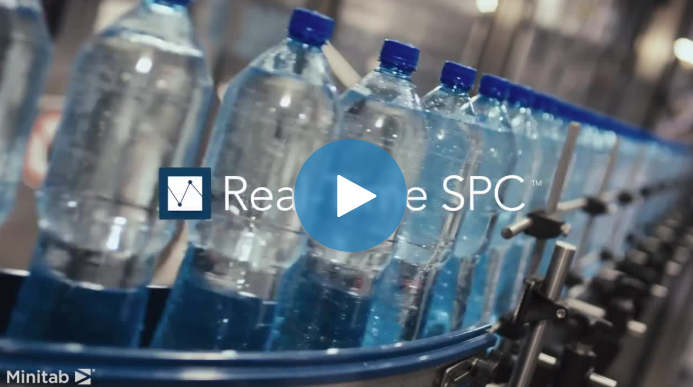
See how real-time process visibility can help beverage manufacturers detect variation earlier, reduce scrap and rework, improve fill consistency, and support continuous improvement.

Test Production Changes Before They Reach the Line
Before increasing line speeds, adding shifts, or changing schedules, manufacturers need to understand how the operation will respond.
Simul8 allows teams to model production scenarios before implementing them. They can compare line speeds, staffing, shift patterns, changeovers, and maintenance schedules to see how each option affects throughput, downtime, queues, and work-in-process.
Simulation can reveal constraints that are not obvious when equipment is evaluated separately. Increasing the speed of one operation may simply create congestion downstream. Testing scenarios first helps teams identify bottlenecks and balance capacity, cost, and risk.
Monitor Quality at Production Speed
Once a production plan is in place, teams need to monitor quality while the line is running. Most beverage plants already collect many measurements, but their value depends on how quickly people can use them.
Minitab Real-Time SPC gives operators, engineers, and quality teams visibility into process performance as production happens. Live control charts and dashboards make changes easier to recognize, while automated alerts notify the right people when a control rule is triggered or performance moves away from expectations.
Teams can investigate sooner, contain the impact, and protect more product instead of discovering a problem after the run. At high volumes, faster response can prevent significant waste, giveaway, or rework.
Understand What Is Driving the Variation
Real-time monitoring shows manufacturers when a process has changed. Statistical analysis helps explain why.
A shift in fill variation could be associated with a specific valve, production speed, temperature, shift, ingredient lot, equipment setting, or recent changeover. Minitab Solution Center helps teams evaluate process capability, compare operating conditions, test potential causes, and identify the variables most closely associated with quality.
This allows manufacturers to address the process rather than rely on repeated adjustments. The same approach applies across formulation, thermal processing, carbonation, fill level, package integrity, labeling, and sanitation checks.
Learn how Real-Time SPC helps manufacturers understand process variation, detect issues earlier, reduce overfill and waste, and make more confident, data-driven decisions.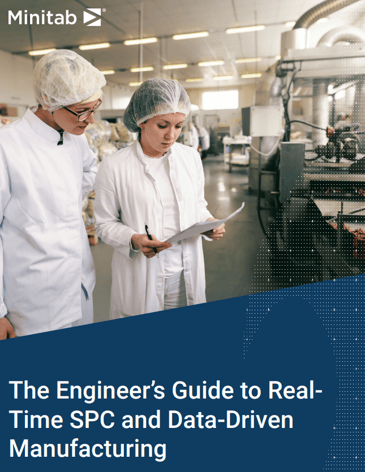

How Can Beverage Manufacturers Turn Increased Demand Into Profitable Growth?
Beverage manufacturers can turn increased demand into profitable growth by managing the capacity constraints, variation, waste, and quality risks that accompany higher production volumes.
Strong sales do not automatically produce stronger margins. When additional output creates more giveaway, scrap, rework, downtime, holds, or customer complaints, part of the opportunity disappears before it reaches the bottom line
Simul8 helps manufacturers evaluate production changes before making them. Minitab Real-Time SPC helps teams monitor quality and respond during production. Minitab Solution Center helps them understand variation and build more capable processes.
Together, these capabilities support a practical sequence: simulate the change, monitor the process, and analyze the results. This gives manufacturers a clearer path to increasing output while protecting quality, efficiency, customer trust, and profitability.
Connect with our team to improve quality, efficiency, and process control across your food and beverage operations.
