---
title: 6 Trends Shaping Business Decisions in 2026
description: Explore six data analytics trends shaping how organizations make decisions in 2026, from quality and OEE to predictive analytics and operational insight.
image: https://blog.minitab.com/hubfs/pexels-shkrabaanthony-5862325.jpg
---
English
- [English](https://blog.minitab.com/en/?hsLang=en)
- [Français](https://blog.minitab.com/fr/?hsLang=en)
- [Deutsch](https://blog.minitab.com/de/?hsLang=en)
- [Português](https://blog.minitab.com/pt/?hsLang=en)
- [Español](https://blog.minitab.com/es/?hsLang=en)
- [日本語](https://blog.minitab.com/ja/?hsLang=en)
- [한국어](https://blog.minitab.com/ko/?hsLang=en)
- [中文(简体)](https://blog.minitab.com/zh/?hsLang=en)
- [English](https://blog.minitab.com/en/blog/6-trends-shaping-business-decisions-in-2026)
- [Chinese](https://blog.minitab.com/zh/blog/6-trends-shaping-business-decisions-in-2026)
- [Español](https://blog.minitab.com/es/blog/6-tendencias-que-estan-dando-forma-a-las-decisiones-empresariales-en-2026)
- [Português](https://blog.minitab.com/pt/blog/6-tendencias-decisoes-empresariais-em-2026)
- [한국어](https://blog.minitab.com/ko/blog/6-trends-shaping-business-decisions-in-2026)
- [ Partners](https://www.minitab.com/en-us/company/partners/)
- [ Contact](https://www.minitab.com/en-us/company/contact-us/)
- [ Talk to Minitab](https://www.minitab.com/en-us/talk-to-minitab/)
- [ My Account](https://licensing.minitab.com/account/manage)
[](https://www.minitab.com/en-us/)
- Products
Back
[Products](https://www.minitab.com/en-us/products/)
[All Products](https://www.minitab.com/en-us/products/)
- [Minitab Solution Center](https://www.minitab.com/en-us/products/minitab-solution-center/)
- [Minitab Statistical Software](https://www.minitab.com/en-us/products/minitab/)
- [Minitab Connect](https://www.minitab.com/en-us/products/connect/)
- [Minitab Model Ops](https://www.minitab.com/en-us/products/model-ops/)
- [Minitab Education Hub](https://www.minitab.com/en-us/products/education-hub/)
- [Minitab Engage](https://www.minitab.com/en-us/products/engage/)
- [Minitab Workspace](https://www.minitab.com/en-us/products/workspace/)
- [Real-Time SPC](https://www.minitab.com/en-us/products/real-time-spc/)
- [Prolink Data Collection & SPC](https://www.minitab.com/en-us/products/prolink)
- [Simul8 Discrete Event Simulation](https://info.minitab.com/en/new-to-simul8?hsLang=en)
- [SPM](https://www.minitab.com/en-us/products/spm/)
- Solutions
Back
[Solutions](https://www.minitab.com/en-us/solutions/)
[All Solutions](https://www.minitab.com/en-us/solutions/)
- [Analytics](https://www.minitab.com/en-us/solutions/analytics/)
- [Statistics & Predictive Analytics](https://www.minitab.com/en-us/solutions/analytics/statistical-analysis-predictive-analytics/)
- [Data Science & Machine Learning](https://www.minitab.com/en-us/solutions/analytics/data-science-machine-learning/)
- [Business Analytics & Intelligence](https://www.minitab.com/en-us/solutions/analytics/business-analytics-intelligence/)
- [Statistical Process Control](https://www.minitab.com/en-us/solutions/analytics/statistical-process-control/)
- [Quality Analytics](https://www.minitab.com/en-us/solutions/analytics/quality-analytics/)
- [Live Analytics](https://www.minitab.com/en-us/solutions/analytics/live-analytics/)
- [Reliability & Life Data Analysis](https://www.minitab.com/en-us/solutions/analytics/reliability/)
- [Discrete Event Simulation](https://info.minitab.com/en/new-to-simul8?hsLang=en)
- [Process Mining](https://info.minitab.com/en/new-to-simul8?hsLang=en)
- [Key Capabilities](https://www.minitab.com/en-us/solutions/key-capabilities/)
- [Continuous Improvement](https://www.minitab.com/en-us/solutions/key-capabilities/continuous-improvement/)
- [Data Integration & Data Prep](https://www.minitab.com/en-us/solutions/key-capabilities/data-integration-data-prep/)
- [Diagramming & Mind Mapping](https://www.minitab.com/en-us/solutions/key-capabilities/diagramming-mind-mapping/)
- [Digital Twins](https://info.minitab.com/en/new-to-simul8?hsLang=en)
- [Model Deployment & ML Ops](https://www.minitab.com/en-us/solutions/key-capabilities/model-deployment-ml-ops/)
- [Innovation & Project Management](https://www.minitab.com/en-us/solutions/key-capabilities/innovation-project-management/)
- [Process Excellence: Detect, Correct & Prevent](https://www.minitab.com/en-us/solutions/key-capabilities/process-excellence/)
- [Featured Industries](https://www.minitab.com/en-us/solutions/industry/)
- [Academic](https://www.minitab.com/en-us/solutions/industry/academic/)
- [Energy & Natural Resources](https://www.minitab.com/en-us/solutions/industry/energy-resources/)
- [Government & Public Sector](https://www.minitab.com/en-us/solutions/industry/government/)
- [Healthcare](https://www.minitab.com/en-us/solutions/industry/healthcare/)
- [Insurance](https://www.minitab.com/en-us/solutions/industry/insurance/)
- [Manufacturing & Industrial](https://www.minitab.com/en-us/solutions/industry/manufacturing-industrial/)
- [Services](https://www.minitab.com/en-us/solutions/industry/service-industries/)
- [Software & Technology](https://www.minitab.com/en-us/solutions/industry/software-technology/)
- [Construction](https://www.minitab.com/en-us/solutions/industry/construction/)
- [Featured Roles](https://www.minitab.com/en-us/solutions/role/)
- [Engineering](https://www.minitab.com/en-us/solutions/role/engineering/)
- [Business Analysis](https://www.minitab.com/en-us/solutions/role/business-analysts/)
- [Information Technology](https://www.minitab.com/en-us/solutions/role/information-technology/)
- [Supply Chain](https://www.minitab.com/en-us/solutions/role/supply-chain/)
- [Customer Service & Contact Center](https://www.minitab.com/en-us/solutions/role/customer-service-contact-center/)
- [Human Resources](https://www.minitab.com/en-us/solutions/role/human-resources/)
- [Marketing](https://www.minitab.com/en-us/solutions/role/marketing/)
- [Research and Development](https://www.minitab.com/en-us/solutions/role/research-and-development/)
- Resources & Services
Back
[Resources & Services](https://www.minitab.com/en-us/resources-services/)
[All Resources & Services](https://www.minitab.com/en-us/resources-services/)
- [Resources](https://www.minitab.com/en-us/resources-services/resources/)
- [Case Studies](https://www.minitab.com/en-us/resources-services/resources/case-studies/)
- [eBooks & White Papers](https://www.minitab.com/en-us/resources-services/resources/ebooks-and-white-papers/)
- [Blog](https://blog.minitab.com/blog/?hsLang=en)
- [Data Sets](https://www.minitab.com/en-us/resources-services/resources/data-set/)
- [Webinars & Events](https://www.minitab.com/en-us/resources-services/resources/events/)
- [Education Hub](https://www.minitab.com/en-us/resources-services/resources/education-hub/)
- [Services](https://www.minitab.com/en-us/resources-services/services/)
- [Training](https://www.minitab.com/en-us/resources-services/services/training/)
- [Deployment](https://www.minitab.com/en-us/resources-services/services/deployment/)
- [Consulting](https://www.minitab.com/en-us/resources-services/services/statistical-consulting/)
- [Self-Paced Learning](https://www.minitab.com/en-us/resources-services/services/self-paced-learning/)
- [Continuing Education](https://www.minitab.com/en-us/resources-services/services/continuing-education/)
- Support
Back
[Support](https://www.minitab.com/en-us/support/)
[Technical Support](https://www.minitab.com/en-us/support/)
- [Subscriptions & Activation](https://www.minitab.com/en-us/support/subscriptions-and-activation/)
- [Minitab Quick Start](https://www.minitab.com/en-us/support/quick-start/)
- [Training](https://www.minitab.com/en-us/resources-services/services/training/)
- [Installation Support](https://www.minitab.com/en-us/support/installation/)
- [Support Videos](https://www.minitab.com/en-us/support/videos/)
- [Support Documentation](https://www.minitab.com/en-us/support/documents/)
- [Software Updates](https://www.minitab.com/en-us/support/software-updates/)
- [Product Downloads](https://www.minitab.com/en-us/support/downloads/)
- [Support Policy](https://www.minitab.com/en-us/support/policy/)
- Company
Back
[Company](https://www.minitab.com/en-us/company/)
[Company](https://www.minitab.com/en-us/company/)
- [About Us](https://www.minitab.com/en-us/company/our-company/)
- [Leadership Team](https://www.minitab.com/en-us/company/leadership-team/)
- [Partners](https://www.minitab.com/en-us/company/partners/)
- [Careers](https://www.minitab.com/en-us/company/careers/)
- [Contact](https://www.minitab.com/en-us/company/contact-us/)
- [News](https://www.minitab.com/en-us/company/press-releases/)
[Try/Buy](https://www.minitab.com/en-us/try-buy/)
- [Statistics](https://blog.minitab.com/en/blog/tag/statistics)
- [Data Analysis](https://blog.minitab.com/en/blog/tag/data-analysis)
-
- [Quality Improvement](https://blog.minitab.com/en/blog/tag/quality-improvement)
- [Subscribe](https://info.minitab.com/blog/subscribe?hsLang=en)

## Notice
You are now leaving minitab.com.
Click Continue to proceed to:
Continue
Go Back
# 6 Trends Shaping Business Decisions in 2026
[Oliver Franz](https://blog.minitab.com/en/blog/author/oliver-franz) | 1/7/2026
Topics: [Data Analysis](https://blog.minitab.com/en/blog/tag/data-analysis), [Quality](https://blog.minitab.com/en/blog/tag/quality), [OEE](https://blog.minitab.com/en/blog/tag/oee)
- [Share](https://www.linkedin.com/shareArticle?mini=true&url=https://blog.minitab.com/en/blog/6-trends-shaping-business-decisions-in-2026)
- [Share](https://www.facebook.com/sharer.php?u=https://blog.minitab.com/en/blog/6-trends-shaping-business-decisions-in-2026)
Data analytics is no longer a competitive advantage on its own. In 2026, the real advantage comes from how effectively organizations turn data into confident, repeatable decisions.
Across industries, leaders are discovering that success is not defined by how much data they collect, but by how consistently that data leads to action. The gap between organizations that measure performance and those that improve it continues to widen, showing up in quality, reliability, and resilience.
Working hand in hand with our customers around the world, we are seeing this shift firsthand. Organizations are applying analytics to everyday challenges, from reducing defects and stabilizing production to prioritizing improvement work and managing operational risk. Over time, clear patterns emerge. Some approaches scale. Others stall.
# **Top Trends in Data Analytics for 2026[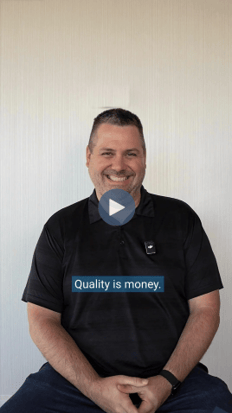](https://share.vidyard.com/watch/iKauZHHZseGqXPzZKLqSkk)**
Based on what we consistently observe across our customers, our research team has studied the top trends shaping how data analytics is being applied in 2026.
Together, they reflect a move away from aspirational analytics and toward disciplined, practical, and scalable decision-making, where AI, analytics, and operational insight work together to deliver measurable results, drive digital transformation and improve outcomes.
## **1. Quality Is Becoming a Core Business Strategy**
Quality is no longer treated as a compliance requirement or a downstream checkpoint. Leading organizations are embedding quality into how decisions are made across operations, engineering, and leadership through data-driven decision making.
When quality improves, waste declines, delivery stabilizes, and customer trust grows. When it doesn’t, the impact is rarely contained. Quality failures show up as missed commitments, rising costs, and erosion of credibility.
What’s changed is how central quality has become to strategic decision-making. Engineering and operations leaders increasingly view quality not as a department, but as an operating model supported by operational analytics.
### See how quality is core to Crayola’s business strategy. [](https://blog.minitab.com/hs/cta/wi/redirect?encryptedPayload=AVxigLJM%2BWtY3pqCYSvbtkDlw0knYCV7uhTatjTuTodaRvClQZEOOjBybmuQ737s%2FZnpR3MKeph3eE%2FWR4q3%2BD4WJCVNOWvDmq1uO1Yfe4%2FCrTNVcEB3OK%2FYf51aevACYEu43goaa2Jl%2FKiOuVgTfRuGxG2p7qQ%2B4EVFXulK7%2BuGsPMO7RhE1NIDrJBL39nMRfbV%2BlShB0kL8ueYglStZIAn59yLMZnt%2F6VHwdwju%2F0oDJCXvLA8&webInteractiveContentId=204367577698&portalId=3447555&hsLang=en)
## 2. Simulation is Replacing Trial and Error
Simulation is not new. What is new is how routinely it is being used to guide everyday decisions.
Organizations are moving away from trial-and-error improvement and toward simulation as a standard step in data-driven decision making. Instead of relying solely on live experimentation, teams model scenarios to understand likely outcomes before changes are made.
This shift reflects rising complexity and higher stakes. When downtime is costly and timelines are tight, teams cannot afford to “see what happens.” Simulation allows them to evaluate alternatives, stress-test assumptions, and focus experimentation where it matters most.
Design of Experiments (DOE) is increasingly used alongside simulation to turn insight into action. Rather than testing one factor at a time, teams use DOE to understand how variables interact, identify the most influential drivers of performance, and validate improvements with fewer trials.
As DOE becomes more accessible, it is moving beyond expert statisticians and into routine improvement work, helping teams make confident changes faster, with less disruption and lower risk.
Improvements are no longer debated endlessly or driven by intuition alone. They are modeled, structured, and supported by evidence before action is taken.
### Explore how Chrysler used simulation to model production flow, test changes in advance, and boost throughput without added cost. [](https://blog.minitab.com/hs/cta/wi/redirect?encryptedPayload=AVxigLK7wRvtm4DVG4I6ZrBkjn7o4osoMSGmU7rHUwwLiuT8X5LvVdGDXSE3j7qPvdN9IQZwkDNZzGx7OLCEHqvrF4pIV8z1ttQ0gWTySNmcDFLM1QAhgoQraF9M0yixffNj4OnibqgONlDvQtj3kA7W8zlsE7VOki0rLSA62JJcGZpNmDXABU1jKrN%2BjK9mCdanHMntE2w5qJtGwHFc9EOTzDeXksLcQWKm&webInteractiveContentId=204367577884&portalId=3447555&hsLang=en)
## **3. OEE Is Evolving From just a Metric into *the* Diagnostic Framework**
Overall Equipment Effectiveness has long been used as a performance metric. In 2026, leading organizations use it differently.
Rather than asking, *“What is our OEE?”* they are asking, *“What is driving our losses?”*
OEE is increasingly used as a diagnostic lens rather than a scorecard. It helps teams identify where availability, performance, or quality breakdowns are occurring and where improvement efforts will have the greatest impact through operational analytics.
This reflects a broader shift: metrics alone do not improve processes. Understanding variation, root causes, and tradeoffs does.
Across organizations, OEE is becoming a starting point for investigation rather than a final judgment. It helps teams ask better questions about reliability, constraints, and operational risk, supporting stronger data-driven decision making.
## 4. Digital Transformation Is Becoming Practical and Measurable
Digital transformation has matured. The conversation is shifting away from large-scale system replacements and future-state abstractions toward tangible improvements in visibility and decision-making.
Organizations are finding value by using the data they already have more effectively. Practical digital transformation emphasizes clarity over complexity and speed over perfection.
The focus is no longer on transformation for its own sake, but on enabling better decisions today. Whether on the production floor or in leadership reviews, the goal is faster insight, clearer tradeoffs, and actions that can be taken with confidence.
### Discover how Maxion Wheels connected improvement efforts at scale across the globe. [](https://blog.minitab.com/hs/cta/wi/redirect?encryptedPayload=AVxigLLl9xkK0Oyem6l1ye0PHWiG%2BqpFnm7YaAwWWt40Rq8PkgKqjpg43kuJN2uqDsb75NR6nxKNxhYkhLtYk73DUAYf37Y%2BRDNvl1xPJiR4URlzVZACqjFmrTdNyWv98h1lTyhqxPAyPgkGDrC2zYNuU8oUTsmT5EulPQiX8WJo82dDjzbWDMdTKJXK8CbpW%2Fibb05jhSpZ46dBO1Nefg6i9u9%2F8dlZ%2Bdo28AU%2BL%2B9%2FpOJnlOU%3D&webInteractiveContentId=204432676260&portalId=3447555&hsLang=en)
## **5. Predictive Analytics and AI Are Converging Around Prevention [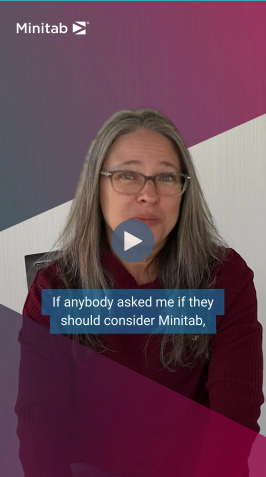](https://share.vidyard.com/watch/cYhDGtLSqA36isKUPWn3FJ)**
Predictive analytics and AI are no longer about forecasting for its own sake. Their real value lies in enabling earlier intervention.
Across organizations, the most effective use of AI is helping teams anticipate risk, prioritize improvement work, and prevent disruptions before they appear in traditional reports.
AI creates speed and scale, but statistical thinking provides trust. The strongest results come when advanced analytics is grounded in disciplined methodology, ensuring insights are explainable, reliable, and actionable.
The outcome is a more preventive operating model, one that reduces surprises and supports confident decision-making.
## 6. Statistical Thinking Is Scaling Beyond the Experts
Perhaps the most important shift is who is using analytics.
Statistical thinking is no longer confined to specialists. Engineers, operators, quality professionals, and leaders are increasingly engaging directly with data as part of everyday work.
As tools become more accessible and workflows more intuitive, analytics becomes a shared capability rather than a bottleneck. This enables faster improvement cycles, better decisions closer to the work, and more resilient operations overall.
## **Looking Ahead**
Across the organizations we serve, one pattern is clear: success with analytics is intentional.
High-performing teams connect quality, OEE, simulation, predictive insight, and statistical thinking into a coherent approach. They don’t treat analytics as a project or a platform, but as a way of working.
The result is not just better analysis, but better decisions, reduced risk, and more reliable performance.
### If you are looking to move from insight to action, Minitab Solution Center helps teams connect data, analysis, and decision-making into a single, scalable approach. [](https://blog.minitab.com/hs/cta/wi/redirect?encryptedPayload=AVxigLIAl%2F82TlCQUz6mQoLAuRNbpjMZ8r8FCaNg2WgbaETjEtUMmr786hTs%2F5qf0U1%2F6poizMwNX9lhSq7tEtFGr3qCWu6xz%2F1Q9ohq0jd%2Fqz%2F4SnG%2BpGHYZ7oZIcZB4rrr3iYxFNbYJUyHb5g9yq1PbIJbG%2BkyxRLE%2FFJo2g7ybS3EO%2BtdxGgAXyCRkvQAxGjMtkFEkAc2XmykC1F05KBXh479DHMdJZ%2BuFFUyB52O&webInteractiveContentId=204364303886&portalId=3447555&hsLang=en)
## You Might Also Like
[New Minitab Updates Unite Data Collection, Preparation, and Predictive Analytics](https://blog.minitab.com/en/blog/new-minitab-updates-unite-data-collection-preparation-and-predictive-analytics?hsLang=en)
[Data Preparation](https://blog.minitab.com/en/blog/tag/data-preparation) | 5 Minute Read
[Get Your Green Tag With Minitab](https://blog.minitab.com/en/blog/get-your-green-tag-with-minitab?hsLang=en)
[Quality](https://blog.minitab.com/en/blog/tag/quality) | 3 Minute Read
[Artemis II Heat Shield: How Do You Decide in Uncertain Conditions?](https://blog.minitab.com/en/blog/artemis-ii-heat-shield-how-do-you-decide-under-uncertainty?hsLang=en)
[Data Analysis](https://blog.minitab.com/en/blog/tag/data-analysis) | 4 Minute Read
---
- [Careers](https://www.minitab.com/en-us/company/careers/)
- [Trust Center](https://www.minitab.com/en-us/trust-center/)
- [Suppliers](https://www.minitab.com/en-us/suppliers/)
- [Site Map](https://www.minitab.com/en-us/site-map/)
- [](https://www.linkedin.com/company/minitab/)
- [](https://www.facebook.com/Minitab/)
- [](https://www.youtube.com/user/MinitabInc)
- [](https://www.instagram.com/minitab/)
---
© 2025 Minitab, LLC. All Rights Reserved.
- [Terms of Use](https://www.minitab.com/en-us/legal/terms-of-use/)
- [Privacy Policy](https://www.minitab.com/en-us/legal/privacy-policy/)
- [Legal](https://www.minitab.com/en-us/legal/)
- Cookies Settings