You have limited prototype builds, limited validation time, limited lab access, and limited engineering bandwidth. Every experiment has to produce insight that moves the design forward.
In product engineering, you are balancing strength, weight, durability, thermal performance, tolerance stack-ups, cost targets, and manufacturability. Small parameter shifts can cascade across performance requirements.
The issue is not whether experimentation matters. The issue is whether your design of experiments (DOE) is structured to reveal interaction effects, nonlinear behavior, and meaningful optimization paths before you commit to another build.
Minitab DOE by Effex, now part of Minitab, focuses on strengthening the design, modeling, and optimization stages of DOE so engineering teams can generate defensible conclusions with fewer iterations.
Here are three practical considerations for product engineering teams.
1. Experimental Resolution Determines Whether You See Interactions
In complex product systems, main effects are rarely the whole story.
For example, wall thickness interacts with material selection, geometry with temperature exposure, and load conditions with assembly tolerances, which one-factor-at-a-time testing will not reliably reveal.
Modern DOE by Effex allows you to evaluate candidate designs based on the correlations among effects before running a single trial. This way you have a clear picture of what you can estimate before running the experiment.
It also includes OMARS (Orthogonal Minimally Aliased Response Surface) designs, which facilitate both screening and optimization in a single experiment. For teams managing expensive prototypes or long environmental test cycles, improving design efficiency reduces iteration loops.
If the design lacks structure, you may complete a full test matrix and still not have clear cause-and-effect insight.
Want to go deeper on how modern DOE is evolving? Watch our on-demand fireside chat on optimal and OMARS designs with Peter Goos for production-ready results.

2. Engineering Optimization Is Multi-Objective by Default
Few product decisions revolve around a single response.
Improving stiffness may increase mass. Reducing cost may affect fatigue life. Adjusting geometry may influence both manufacturability and performance margins.
Modern design of experiments must reflect that reality.
Minitab DOE by Effex integrates screening, regression modeling, response surface methodology, and multi-response optimization into a unified workflow. Engineers can explore prediction profilers, contour plots, and response surfaces to understand trade-offs visually.
Instead of optimizing one metric at a time, you can define acceptable performance windows and evaluate combinations that maximize the likelihood of meeting all targets.
That shift — from isolated tuning to system-level optimization — is where DOE becomes a strategic engineering tool rather than a statistical exercise.
3. Traceability Supports Design Reviews and Validation
Engineering decisions must withstand scrutiny.
When parameters change, stakeholders want to know why. Was it data-driven? Were interactions considered? Was model adequacy verified?
Minitab DOE by Effex provides structured documentation of factor settings, model fits, and optimization results in a shared environment. Rather than relying on disconnected spreadsheets, teams can centralize experimental assumptions and conclusions.
When design reviews ask why a tolerance shifted or a material specification changed, you can point to a defined DOE model rather than anecdotal test outcomes.
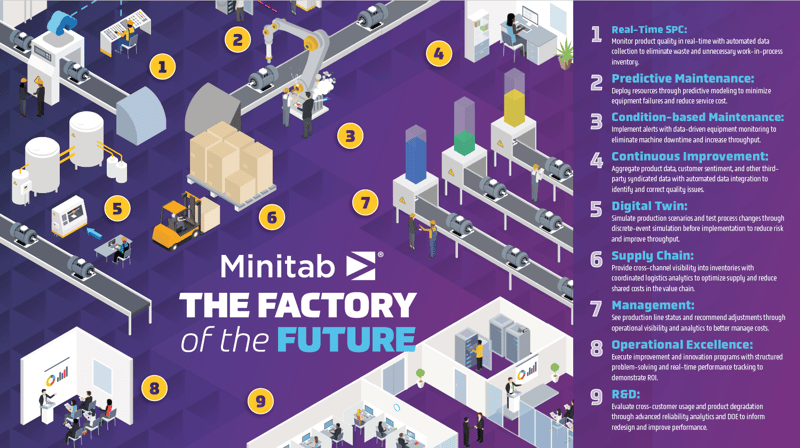
DOE doesn’t operate in isolation; it feeds into broader engineering, manufacturing, and operational decisions across the system. Download our infographic to see how.

When Should Engineering Teams Reevaluate Their DOE Approach?
If your team is:
- Repeating builds because early tests were inconclusive
- Missing interaction effects
- Struggling to balance multiple performance requirements
- Extending development cycles due to unclear optimization paths
…it may be time to strengthen your approach to design of experiments.
DOE software should do more than generate a run matrix. It should help engineers design efficient experiments, model complex systems, and optimize performance with statistical rigor.
Minitab DOE by Effex was developed with those realities in mind and now operates within the broader Minitab ecosystem, supporting product engineers who need clearer answers before the next prototype build.
Reevaluate your DOE before your next build.