Throughout this month, we’ve been celebrating women in STEM who have shaped the way we think, build, and solve problems today. From the stories we shared on Instagram—like this one, this one, this one, and this one—one theme stands out: some of the most impactful work happens quietly, behind the scenes.
This story might be the clearest example of that.
Because every time you open a maps app, track a package, or call a rideshare, you are relying on decades of mathematical precision most people never think about.
At the center of that precision is Dr. Gladys West.
Before GPS Was a Tool, It Was a Math Problem
We think of GPS as satellites orbiting Earth. But before that, scientists had to answer a harder question:
Where, exactly, are we on Earth?
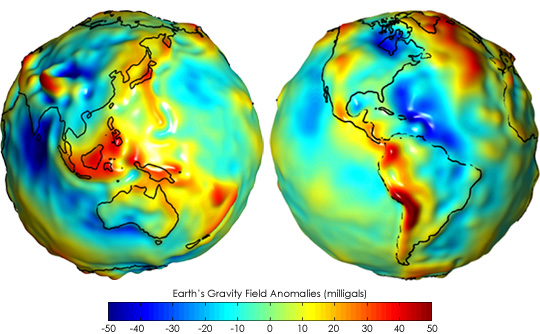
The challenge is that Earth is not a perfect sphere. It is irregular and influenced by gravity and terrain. Even small miscalculations could throw off positioning by miles.
This was not just a physics problem. It was a data problem.
Today, this is the kind of challenge teams solve with tools like Minitab: modeling complex systems, working with imperfect data, and driving precision that holds up in the real world.
But in the 1950s, that meant building those models from scratch.
West grew up in rural Virginia, where she saw education as her path forward. She excelled in mathematics, graduated at the top of her class, and earned a scholarship to college.
At a time when few women, and even fewer Black women, were encouraged to pursue math, she chose it anyway.
That decision would quietly shape the future of navigation.
In 1956, West joined the U.S. Navy as a mathematician, working on satellite data analysis.
Her focus became one of the most complex challenges in geospatial science: modeling the true shape of the Earth.
Using satellite data and advanced computations, she helped develop highly accurate representations of Earth’s surface, accounting for gravitational variations and irregularities.
This work became the foundation for modern GPS.
|
The Breakthrough Behind GPS AccuracyWest’s models made it possible to calculate satellite positions with extreme precision. Without that precision, GPS would not work reliably. Your location could be off by miles instead of meters. Today, GPS powers everything from navigation apps to supply chains and manufacturing systems. And it all depends on one thing: accurate data. |
Why This Story Still Matters
Gladys West’s work is a powerful example of what happens when data is modeled correctly.
She transformed complex, imperfect data into something actionable and reliable.
That same challenge exists across industries today. In manufacturing, inaccurate data leads to defects. In healthcare, it impacts outcomes. In supply chains, it creates delays.
The difference comes down to how well data is understood and analyzed.
This is where Minitab plays a role.
Minitab helps organizations do what West did at a foundational level:
- Turn raw data into accurate models
- Understand variation and its impact
- Make decisions with confidence
The tools have evolved, yet the challenge hasn’t.
A Legacy That Came LaterFor much of her career, West’s contributions were not widely recognized. Her work was technical, behind the scenes, and part of larger efforts. It was only later in her life that her role in GPS became widely known, earning her recognition such as induction into the Air Force Space and Missile Pioneers Hall of Fame. By then, billions of people were already using technology built on her work.
The Power of PrecisionWest focused on getting the math right. That focus made everything else possible. Today, we live in a world powered by data. But data alone is not enough. It is the ability to model it, analyze it, and trust it that drives real outcomes. Every accurate GPS signal. Every optimized process. Every confident decision. They all start in the same place: with precision.
|
 |
Closing Women’s History Month
As we close out Women’s History Month, stories like Dr. Gladys West’s remind us that innovation is not always visible, but it is always foundational.
And often, the most important breakthroughs are the ones we use every day without ever realizing who made them possible.
Explore how your team can turn complex data into confident decisions with Minitab.